"The team's purpose is not merely the sum of the individual member's contributions, nor is it the same as the purpose of the organization" (Peter Hawkins,)
"What is the team for that no other entity in the organization can accomplish?" (Wageman)
"What can we uniquely do that the world of tomorrow needs - what can we do together that we cannot do apart" (Hawkins)
In fact, many management teams I meet have no clear purpose. They think their job is to execute the business plan and budget. As a CEO, you know that it is so much more than that. If you as a team and individual team members don't have a clear purpose, it is difficult to be a successful management team. You need to form a common understanding and clearly state what the group wants to achieve by really working together.
Clarifying the purpose is the first and most important step to take when developing a management team. We know that a group needs a common goal in order to be called a team. The general definition of a team can be expressed:
"A small number of people with complementary skills who are committed to a common purpose, set of performance goals and shared approach for which they hold themselves mutually accountable. The approach needs to include:
- effectively engaging with all the team's key stakeholder groups and ways that individuals and the team can continually learn and develop
- ways of effectively meeting and communicating that raise morale and alignment"
The definition is originally from Katzenbach's research and further developed by Prof. Hawkins.
The right perspective
The basis of a management team is that everyone has a management perspective. Everyone needs to have the CEO perspective and assist the CEO with thoughts, considerations and decision-making. Choices and decisions that should be for the good of the entire organization.
What is the work they can do together that they cannot do separately?
Investing time and effort in the group to establish why you exist will pay off. This is not easy, because it is often confused with the overall goals and strategies of the organization. The purpose of the management team needs to be what and how to work in order to deliver on this. Every organization is unique and has its culture, management style and patterns. Depending on the maturity of the management team and what they want to achieve, the purpose of the team may actually differ between organizations. Develop KPIs that the whole team needs to work together to achieve. Link the individual KPIs to the overall goals and purpose of the team. Each individual needs to have clear goals around what they are expected to deliver to their colleagues. In addition, clear expectations on how they will contribute and add value to the joint work of the management team.
Research by Ruth Wageman's team found, somewhat surprisingly, that a CEO often has very challenging goals at the individual level for their direct reports, but much softer goals around what the management team should achieve together as a group.
This in itself leads individuals to focus more on their challenges and less on the collective work of the team (Wageman et al in "Senior Leadership Teams", 2008). The researchers note that although individuals in the leadership team say they agree on overall goals and strategies, they often do not agree on how to get there. When asked, they use familiar phrases from the Strategic/Business Plan or use the same language that the CEO uses in his speeches. When they are asked to specify and talk about how the execution should be done in practice, a scattered picture of the approach is often revealed. It is not uncommon to hear conflicting "how" to implement the strategy.
Clear purpose
It is more important than you might think to agree on what the management group's work should aim to achieve. We need to be at the same meeting and know what we are going to achieve together in the management group.
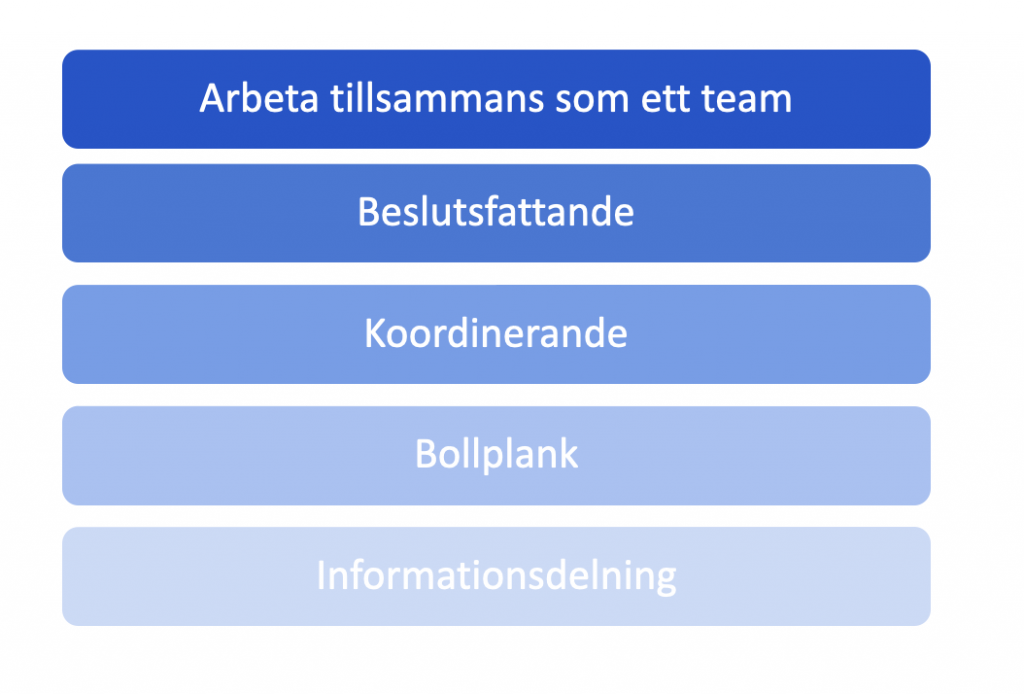
In my opinion, it is a waste of time to gather the top leaders in the management team just to exchange information and together look in the rearview mirror and try to understand what has happened. Working together actively on the future challenges of the organization is a better way to leverage the experience and capacity that usually exists in the group. Making joint conscious decisions about future choices creates a good basis for successful implementation. If you want a management team to contribute to the organization's strategic development, you need to get the group to work as a real team. This does not happen by itself, but is the result of a conscious effort on the part of the CEO.
Please answer the following questions regarding the management team you belong to:
- What is our management team for, that no other unit in the organization could achieve?
- What do we want to achieve with our work?
- In which areas do we need to work together to find sustainable solutions?
- What expectations can I have of my colleagues in the group?
Kickstart 2025 with the Management Team
Bring your management team together for a kick-off to create a more effective management team. Build the foundation for value-creating work in the group. Clarifying purpose and expectations can create outstanding results in a short time in the way the management team works. It will also make participation in the work of the management team more rewarding and fulfilling.
Call or email me if you want tips on a kickoff with your management team:
Call: 0733-31 22 29 II email: mikael.brander@bioss.com
Success in the Management Team
Do you want to know more about how to develop your management team into an effective leadership team? I have developed a unique online training that summarizes my experience after working for 30+ years assisting and coaching CEOs and management teams.
Through the course you will
- access to different perspectives on what makes a management team effective.
- what you, as a leader of a management team, can do to get the group to work together.
- tips on how you, as a member of the group, can behave to make the group perform better.
- concrete ways and methods how you can build and develop a well-functioning management.
- what modern research indicates about management and governance and what leads to effective management.
Click here for more information!
* Ruth Wageman, Debra A. Nunes, James A Burruss, J. Richard Hackman; Senior Leadership Teams - What it takes to make them great; Harvard Business Review Press, 2008
* Peter Hawkins, Leadership Team Coaching - Developing collective transformational leadership, Kogan Page 4th edition 2021